



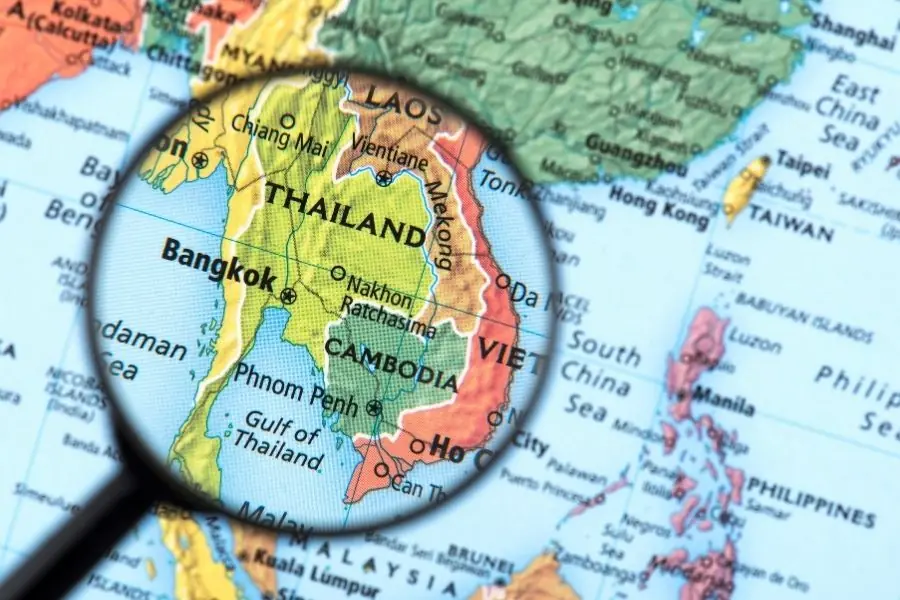
You opened this page because you are thinking about a trip to Thailand. Maybe it is still a vague idea, maybe you already have the dates in your head but not the pieces that hold a plan together.
Here you will find what you actually need: weather, costs, transport, itineraries and the practical advice you usually only get from people who live and work here. No copy-and-paste content, only information we check on the ground.
Table of contents❯
Thailand at a Glance: The Key Points for Your Trip
General Facts
About 513,000 km², almost exactly the same area as Spain
Around 66 million (2025 figure)
Bangkok (Krung Thep Maha Nakhon to locals)
Thai
Thai baht (THB). €1 is worth roughly 38–40 THB (always check the current rate)
UTC+7 all year round. Thailand never puts its clocks forward, so the gap with home shifts when your own country moves to daylight saving time
Suvarnabhumi (BKK) is Bangkok's main international hub. Don Mueang (DMK) handles most low-cost flights. Phuket (HKT) and Chiang Mai (CNX) also take international arrivals
Over 100, with a dense domestic network that makes hopping between regions straightforward
Facts About Thailand Worth Knowing
A few things that go beyond the standard guidebook:
Thailand was never colonized by a European power, a rarity in the region that still shapes its culture and its sense of national identity.
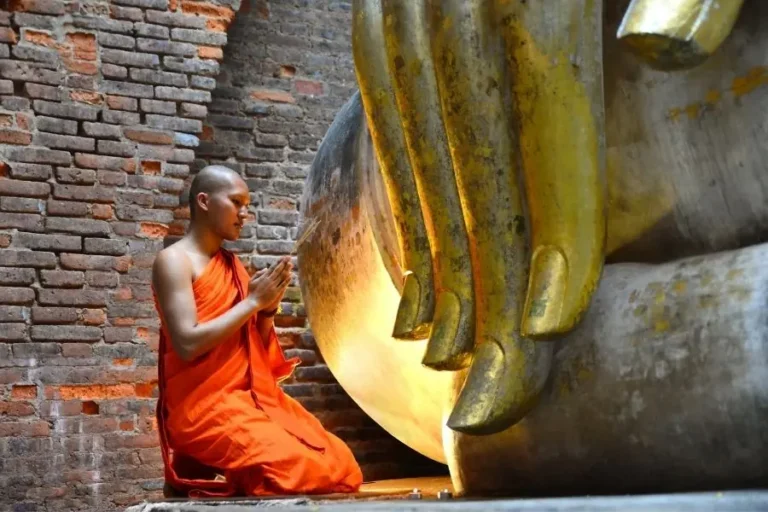
Theravada Buddhism is practiced by the large majority and runs through every part of daily life, from what monks eat to how villages are laid out.
Muay Thai goes back centuries and is still part of physical education in Thai schools.
Mango sticky rice is not a dessert invented for tourist restaurants: it is genuine street food, sold almost everywhere, for about what a coffee costs back home.
Bangkok holds the record for the longest official city name in the world. The full Thai version runs to 168 characters.
Why Choose Thailand for Your Trip?
It is not only about beaches or low prices, although both count for a lot. Thailand works because it fits everything into a manageable distance: mountains and jungle in the north, an enormous capital in the middle, and island groups of rare beauty in the south.
It is also a country that does not make life hard for visitors. Domestic transport is well run, signage in tourist areas is often in English, and the hospitality is genuine rather than a performance. You can see how it earned the nickname “Land of Smiles”.
Compared with other Southeast Asian destinations it has a logistical advantage too. Bangkok is one of the best connected airports in Asia: long-haul flights land direct from Europe, the Gulf, Australia and East Asia, and from North America you are one stop away through Doha, Dubai, Istanbul, Tokyo or Singapore. Phuket takes long-haul arrivals of its own in high season. That keeps Thailand realistic even if you only have ten days off.
What We See on the Ground
Working every day with people planning trips to this part of the world, we notice the same pattern: almost everyone who comes to Thailand for the first time wishes they had stayed longer. The reason is simple. You only understand how big the country is, and how much you are leaving out, once you are here.
Our practical advice is not to try to see it all on a first trip. Two or three areas taken slowly beat a sprint from one coast to the other. Thailand works perfectly well one region at a time.
When to Go to Thailand: Weather and Best Time to Travel
Thailand’s climate is tropical and splits into three phases, which behave differently from region to region. The north and the center follow a clear rhythm; the south has two coasts with almost opposite seasons, a detail that catches out plenty of travelers.
Thailand Weather Table
| Period | Season | What to expect |
|---|---|---|
| November – February | Dry season | Between 25 and 30 °C (77–86 °F), clear skies, bearable humidity. The best window for almost the whole country. |
| March – May | Hot season | The heat turns serious, with peaks close to 40 °C (104 °F), above all through April. |
| June – October | Rainy season | The monsoon brings short but heavy downpours. September and October are the wettest months. |
| Tip: For up-to-date forecasts and live warnings, check the official Thai Meteorological Department site. |
One Piece of Advice From Living Here
If you are looking at the north between February and March, keep in mind that the area around Chiang Mai is often hit by what people here call the burning season: agricultural fires plus a thermal inversion push air quality a long way down, sometimes for weeks. It is not a small detail, above all if you have breathing problems or are traveling with children.
In the south, remember that the two coasts do not share the same rainy season. The west coast (Phuket, Krabi) takes the southwest monsoon from May to October, while the east coast (Koh Samui, Koh Phangan) gets its heaviest rain between October and December. In practice, when one coast is wet the other one is dry.
A Quick Guide: Where to Go and What to See in Thailand
Thailand divides into three broad areas, each with a character of its own. Which one you pick depends on what you are after and how much time you have.
The near-obligatory starting point. The Royal Palace, the floating markets, the best street food in the country and nightlife that never really stops.
Anyone who likes an urban pace (Siam/Sukhumvit) or quieter corners (Riverside).
Ideal for: Anyone who likes an urban pace (Siam/Sukhumvit) or quieter corners (Riverside).
Temples buried in the jungle, night markets and ethical elephant sanctuaries. A slower, more spiritual rhythm, nothing like the capital.
Nature, culture and trekking.
Ideal for: Nature, culture and trekking.
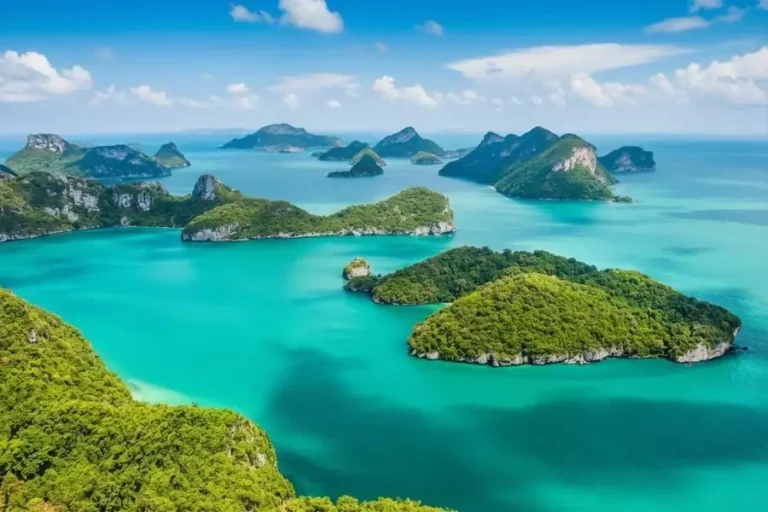
From the comforts of Phuket and Krabi to the calm of Koh Lanta and Khao Lak. For clear water there is Koh Lipe or Koh Kood, while the Gulf side (Samui) is at its best from June to September.
Beach time, diving and anyone who loves the sea.
Ideal for: Beach time, diving and anyone who loves the sea.
What to Do and See in Thailand
There is more to see than one article can hold. These are the highlights, the ones almost nobody regrets making time for:
The Temples of Bangkok
The Royal Palace and Wat Phra Kaew are the country’s calling card. Wat Pho holds the famous 46-meter Reclining Buddha. Wat Arun, its towers covered in colored porcelain, is at its most striking at sunset, seen from the far bank of the river.
The North: Elephants and Mountains
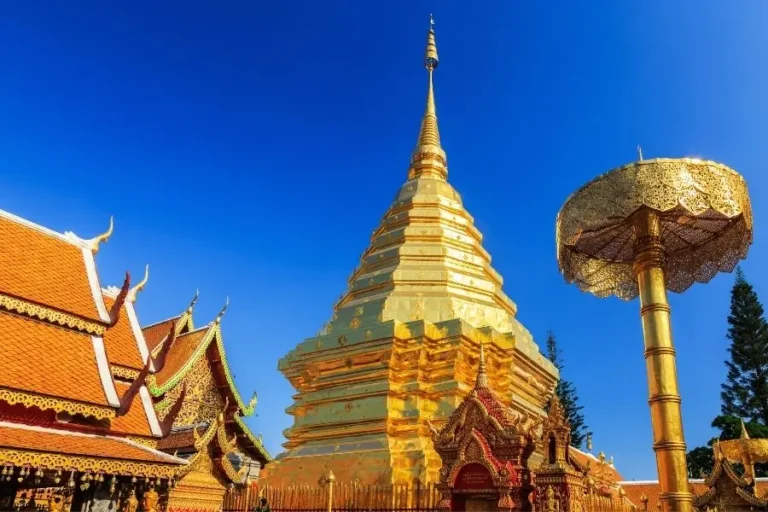
The ethical elephant sanctuaries near Chiang Mai let you spend time with these animals responsibly. Doi Suthep, the temple looking down on the city, is reached by climbing 309 steps or by shuttle if you would rather take it easy.
The Old Capitals: Ayutthaya and Sukhothai
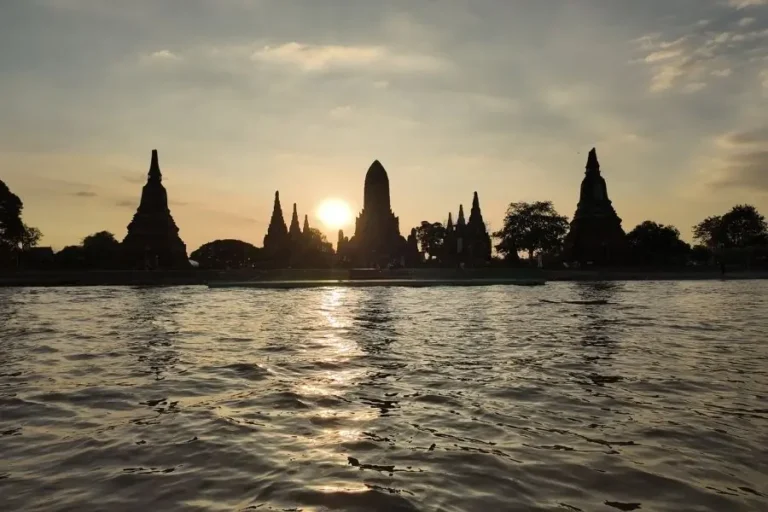
Ayutthaya, a little over an hour from Bangkok, was one of the wealthiest cities in the medieval world. If you have more time, Sukhothai has a magic of its own. Both sets of ruins are UNESCO World Heritage Sites today and are easy to explore by bicycle.
National Parks and Wild Thailand
Khao Sok in the south is one of the oldest rainforests on the planet, and you can sleep in a room floating on the lake. Khao Yai, an easy run from Bangkok, suits anyone hoping to spot local wildlife.
Songkran
Thai New Year, in mid-April, is celebrated with the biggest street water fight in the world. Loud, chaotic and genuinely hard to forget if you are in the country at that time.
How Many Days You Need in Thailand, and Suggested Itineraries
The blunt answer: ten days is the realistic minimum for a first trip. With less than a week you risk spending half your time in airports, or feeling rushed from start to finish.
With fourteen days you can build a full, satisfying route without giving up anything essential.
The Classic Route
- Bangkok – the main temples (3–4 days)
- Chiang Mai and Chiang Rai – the north (3–4 days)
- The south and the islands – depending on the season (5–6 days)
South Only
- Bangkok – two nights (2–3 days)
- The south and the islands – depending on the season (5–6 days)
North and Culture
- Bangkok – the capital and its temples
- Ayutthaya – a day trip
- Chiang Mai and around – the north and trekking
Getting Around: Transport, Taxis and Tuk-Tuks
The most reliable and cheapest way to move around Bangkok is the BTS Skytrain or the MRT metro: you skip the city’s legendary traffic and pay between 16 and 60 baht a ride. On the water, the express boats along the Chao Phraya are both scenic and genuinely useful.
Outside the capital, the options change:
For long distances, flying is usually the sensible call. AirAsia and Nok Air link Bangkok with the main destinations at competitive fares if you book ahead.
Scenic and slow, excellent on a tight budget and if you have time to spare. Less suited to quick hops between distant regions.
Cheap and everywhere, they cover the routes and the towns the rail network cannot reach.
Insist on the meter, or use an app such as Grab or Bolt: they remain the easiest way to have a fixed, transparent fare before you get in.
A tourist icon, but often dearer than a taxi. Take one for short hops and enjoy it as an experience rather than as daily transport.
The red pick-up trucks with a bench down each side, a shared pick-up truck that works as a collective taxi on the islands and in the north. Cheap (30–50 baht) and thoroughly local.
How Much Does a Trip to Thailand Cost? Budget and Prices
Thailand is still one of the most affordable destinations by Western standards, but “cheap” does not mean the same number for everyone. It depends a great deal on how and where you want to stay.
Backpacker:
On roughly €50–60 a day you can sleep in decent hostels, eat street food three times a day and get around on public transport without any trouble.
Mid-range:
At €80–120 a day you get air-conditioned hotels in central locations, a few restaurant meals and organized tours to the main sights.
Comfort and luxury:
From €150 a day upwards, Thailand gives you resorts of international standard, private experiences and high-end dinners at prices that would be out of reach in most Western countries.
A few practical benchmarks:
A dorm bed averages between €14 and €20 a night.
A double room with air conditioning runs between €25 and €50.
A typical dish from a street stall costs between €0.80 and €2.50.
A pizza or an international dish in a sit-down place is around €10–15.
A local beer ordered in a bar averages between €1.50 and €3.
A route such as Bangkok–Phuket costs between €30 and €50 if booked ahead.
5 Mistakes to Avoid on Your First Trip to Thailand
Traveling without proper health insurance
Private hospitals here are excellent, but a stay can cost a fortune and no national health service covers you in Thailand. A policy with full medical cover and repatriation is not an optional extra: it is the base of any responsible trip.
Ignoring the dress code in temples
Shoulders and knees have to be covered. It is not a question of style but of respect for the people praying. Keep a sarong or a light shirt in your bag so you are not turned away at the entrance.
Underestimating basic cultural rules
Never touch anyone's head (the sacred part) and never point your feet (the impure part) at a person or at an image of the Buddha. These small habits change completely how you are read by the people around you.
Using Bangkok only as a quick stopover
A common mistake. Bangkok deserves at least three full nights to get at its hidden markets, its art districts and one of the deepest food scenes anywhere in Asia.
Not respecting the laws on the monarchy
Thailand has extremely strict lèse-majesté laws. Any negative comment about the royal family, social media included, can lead to very serious legal trouble. The rule applies to foreign visitors exactly as it does to Thais.
Ready to plan your Thailand trip?
No planning stress. Our team builds the itinerary around you, with private tours, licensed English-speaking guides and 24/7 support for the whole trip.
Explore Thailand With Us: Thailand Fantastic Tours
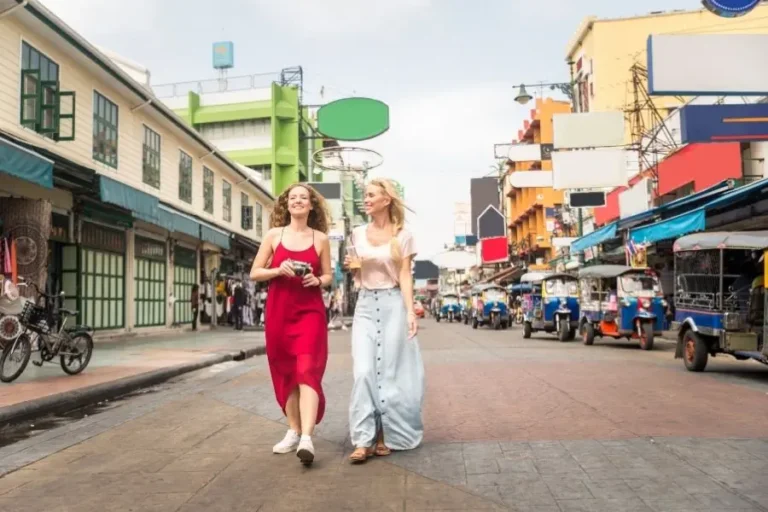
Our Day Trips From Bangkok
Our Multi-Day Tours From Bangkok
FAQ
When is the best time to visit Thailand?
For most of the country the sweet spot is November to February, when temperatures are pleasant and rain is rare. If you have only the south in mind, bear in mind that the two coasts run on different seasons: check the specific area before you book.
What documents do I need to enter Thailand?
Entry rules depend on your nationality, so check the requirements for your own passport with your government or with the nearest Royal Thai Embassy before booking. Two things apply to every visitor: a passport valid for at least six months from the date of entry, with at least two blank pages, and the Thailand Digital Arrival Card, which every foreign arrival has to submit online within the three days before landing.
Can you drink the tap water?
No. Tap water is not safe to drink for visitors. Bottled or filtered water is the norm everywhere, and it costs next to nothing in any minimart or 7-Eleven.
Do I need baht in cash before I leave?
Not really. ATMs are everywhere. Bear in mind that Thai banks charge a flat fee (usually between 150 and 220 baht) on every withdrawal made with a foreign card, so fewer and larger withdrawals work out cheaper.
Is Thailand safe for people traveling on their own?
Yes, it is one of the safest destinations in Southeast Asia, women traveling alone included. Common sense still applies: watch out for small tourist scams in Bangkok, and if you ride a scooter, wear a helmet and take it gently.
This guide may contain affiliate links: if you book through one of them, nothing changes for you, while we receive a small commission from the booking platform, which repays the time spent writing and updating this guide. More information.