



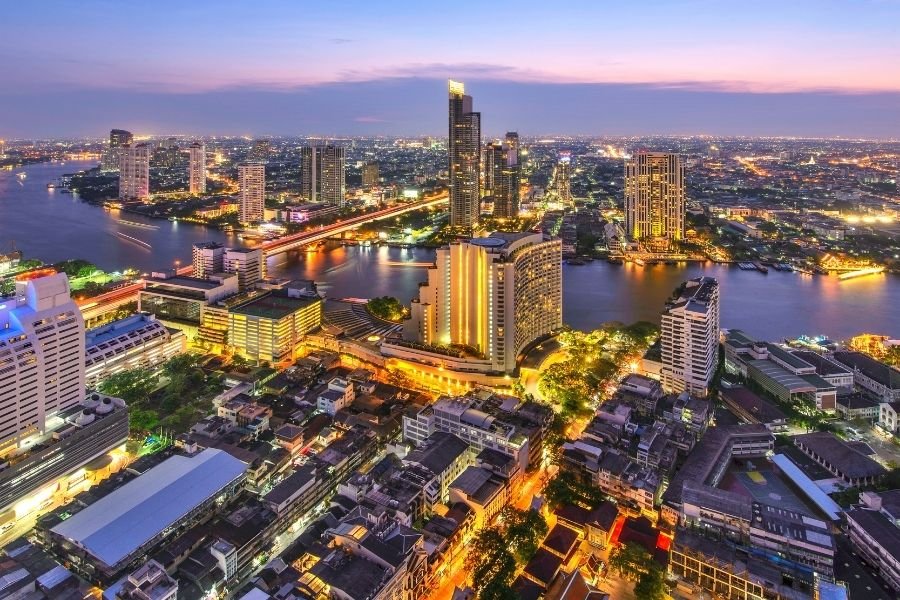
Welcome to Bangkok, the Thai capital where centuries-old temples stand at the foot of glass towers. This Bangkok travel guide, written by our team on the ground, walks you through every part of a stay in the City of Angels, from picking your dates to picking your street.
Table of contents❯
What to Expect from the City of Angels
Bangkok at a glance, before we get into the detail.
One Piece of Bangkok Trivia
Everyone knows it as Bangkok, but Thai people simply say Krung Thep, the City of Angels. Even that is a short form: the full ceremonial name of the capital holds the Guinness record as the longest place name in the world. Take a deep breath:
“Krungthepmahanakhon Amonrattanakosin Mahintharayutthaya Mahadilokphop Noppharatratchathaniburirom Udomratchaniwetmahasathan Amonphimanawatansatit Sakkathattiyawitsanukamprasit.”
It is not a tongue twister but a poem in an old language: a long praise of the city, described as an unconquerable capital, magnificent, full of grand royal palaces and handed down by the gods themselves. Worth memorising if you want to surprise the people you travel with.
Why Choose Bangkok for Your Trip?
Easy to reach thanks to excellent air links, Bangkok wins you over with its famous organized chaos: a balance between the stillness of landmark temples such as the Grand Palace, the noise of the street markets and the wide views from the rooftop bars. It works in every season and it bends to whoever turns up, from a five-star suite to a hostel bed or a family room at a fair rate. Culture, shopping and nightlife run side by side here, at almost any hour of the day.
What Our Team on the Ground Sees
Working with travelers every day, we notice that Bangkok fits equally well as the opening stop of a Thailand itinerary or as the hub you keep returning to between flights. Whatever kind of traveler you are, the city rarely disappoints.
When to Visit Bangkok
On paper the answer is straightforward: the best time to visit Bangkok runs from November to February. Those months are dry and cooler, with temperatures between 20°C and 30°C, comfortable enough to walk the city, spend a morning in the temples and an afternoon among the market stalls.
Bangkok Weather Season by Season
Cool and Dry
Hot
Rainy
And Here Is the Honest Answer, From People Who Live Here:
the Thai capital is a big, well-equipped city that works 365 days a year. Do not let the forecast set your dates, because there is always a spectacular alternative:
If it gets too hot:
The city is a masterpiece of air conditioning. The BTS Skytrain and the MRT subway move you around without either the traffic or the humidity. The hottest hours are the right moment for the huge malls (IconSiam or Siam Paragon), for a two-hour Thai massage, or for a nap at the hotel before heading out after dark, between night markets and rooftop bars.
If the rain comes down hard:
Tropical downpours are usually heavy and short. If one catches you out, the indoor list is long: contemporary art museums, the big aquarium, a Thai cooking class, the covered markets. Often it is enough to step into a café or a temple, wait half an hour, and walk back out into the sun.
The short version: pick your dates around your vacation days. Bangkok has something worth doing in the sun, in the heat and in the rain.
A Quick Bangkok Travel Guide: Areas, Things to Do and Practical Tips
Which Area of Bangkok Should You Choose?
Bangkok is less a city than a set of small worlds. Every neighborhood has a character of its own, and where you sleep, or where you spend your afternoons, changes the shape of the whole trip.
The royal and sacred core. The Grand Palace, the great temples and the long-running circus of Khao San Road.
History, and a first visit.
Ideal for: History, and a first visit.
An explosive mix: the unfiltered din of Yaowarat next to the creative revival along the river.
Street food and photography.
Ideal for: Street food and photography.
The business district with two faces. Landmark towers and nightlife in Silom, quiet luxury hotels in Sathon.
Couples, and faultless logistics.
Ideal for: Couples, and faultless logistics.
World shopping headquarters. From designer malls to wholesale markets, all a short BTS ride apart.
Shoppers and families.
Ideal for: Shoppers and families.
The cosmopolitan, fashionable side of town. Rooftop bars, members' clubs and restaurants from every country.
Nightlife and expat living.
Ideal for: Nightlife and expat living.
The charm of the "Venice of the East". Landmark resorts on the east bank, slow canal life on the west.
Honeymoons and long views.
Ideal for: Honeymoons and long views.
What to See and Do in Bangkok?
Bangkok mixes the old and the new better than most. The short list: the landmark temples (Grand Palace, Wat Pho, Wat Arun), the street food of Chinatown, a boat ride along the canals and the Jim Thompson House. After dark the city moves to the night markets, the noise of Khao San Road and the rooftops.
Two full days are enough to take the measure of the capital, but with more time Bangkok becomes the base for day trips: the floating markets, the ruins of Ayutthaya, the rivers and forests of Kanchanaburi and Khao Yai, or the beaches at Pattaya.
How Many Days Do You Need in Bangkok? Suggested Itineraries
We suggest a minimum of three nights and four days for the main sights, with the option of adding one more day for a trip out of town, to Ayutthaya or the floating markets. If you would rather take the city slowly, five to seven days is not too much.
Where to Stay in Bangkok?
Pick the hotel around the transport before anything else: a short walk to a BTS Skytrain or MRT station is what keeps you out of the city traffic. The riverside suits a splurge, Sukhumvit suits having everything within reach.
Getting to Bangkok and Getting Around
The quickest option is the BTS Skytrain or the MRT subway: both skip the traffic and cover the main tourist areas. Taxis are cheap and fine for short hops, though rush hour turns them slow. A tuk-tuk is an experience to have once, less so for long distances. The public boats on the Chao Phraya, meanwhile, are a scenic and cheap way to travel between the old town temples and the riverside.
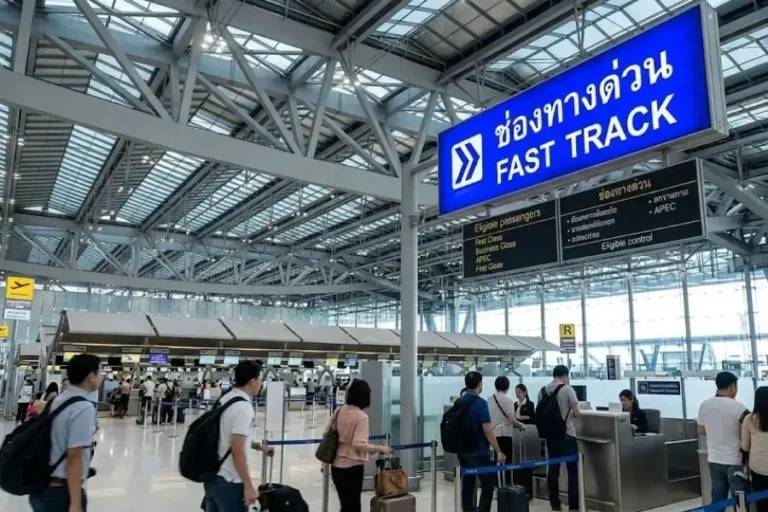
Two airports connect the city to the rest of the world: Suvarnabhumi (BKK), which handles most international flights, and Don Mueang (DMK), used mainly by low-cost carriers.
5 Mistakes to Avoid on Your First Trip to Bangkok
Getting into a taxi with no meter
If the driver says "fixed price", get out. The meter is required by law and it always works out cheaper. Grab is the easy alternative.
Turning up at the Grand Palace underdressed
Shoulders and knees have to be covered. If they are not, you will be buying an overpriced sarong at the gate. A light scarf in the bag settles it.
Falling for the "temple is closed" scam
If a stranger tells you Wat Phra Kaew is "closed today" and offers a tuk-tuk tour instead, it is almost certainly a scam. Check the official website.
Underestimating the heat and forgetting to drink
Bangkok can pass 35°C with very high humidity. Carry water and sunscreen, and put the outdoor stops in the early morning.
Trying to see too much in too little time
The city is huge and the traffic slows everything down. Four or five sights done properly beat ten done at a run. Group your stops by neighborhood.
Ready to see Bangkok at its best?
No planning stress. Our team builds the itinerary around you, with private tours, licensed English-speaking guides and 24/7 support for the whole trip.
How Much Does a Trip to Bangkok Cost? Budget and Prices
Bangkok remains one of the more affordable capitals in Asia, but the final figure depends heavily on how you travel. As a rule of thumb, a mid-range day in Bangkok works out between €60 and €120 per person. That is an all-in number, covering a 3 or 4 star hotel, a mix of Thai street food and local restaurants, public transport and entry to the main sights.
Travel with a backpack and you can comfortably stay under the €40 mark. At the other end, a luxury stay in the capital starts around €180 and climbs from there.
Here Is Where the Money Goes in Bangkok:
Eating in Thailand:
Real street food is remarkably cheap (€1.2 to €3 a dish). A typical local restaurant runs €3 to €8, while an international one lands between €10 and €20 (a western-style pizza alone costs more than €10).
Getting around
The fast public transport, the elevated Skytrain (BTS) and the underground MRT, lets you skip the traffic for a few tens of cents a ride.
Culture and sights:
Most of the smaller temples and the historic markets cost nothing at all to enter.
So what really moves the budget? Accommodation, by a distance. Paying a little more for a hotel in a strategic spot, a few steps from an MRT or BTS station, is an investment worth every extra euro: it buys back the time you would otherwise lose in traffic.
Explore Thailand With Us: Thailand Fantastic Tours

FAQ
How many days do you need in Bangkok?
Three or four days cover the main sights and still leave room for one day out of town, to Ayutthaya or the floating markets.
When is the best time to visit Bangkok?
November to February is the most comfortable window for walking the city and visiting temples.
How do you get around Bangkok?
BTS and MRT together are the quickest way to skip the traffic. Taxis and tuk-tuks are on hand for short hops, though we usually arrange private transfers for comfort.
Is Bangkok safe for families and solo travelers?
Bangkok is one of the safest capitals in Asia. Tourist police are a constant presence and local people are welcoming to every kind of visitor.
Are ATMs and exchange counters easy to find?
Yes. Cash machines and currency exchange booths are everywhere, above all inside the big malls and around the Skytrain stations.
This guide may contain affiliate links: if you book through one of them, nothing changes for you, while we receive a small commission from the booking platform, which repays the time spent writing and updating this guide. More information.